POPPUR爱换

标题: NVIDIA GTC 2012 现场直播贴。 [打印本页]

作者: Edison    时间: 2012-5-16 01:36
标题: NVIDIA GTC 2012 现场直播贴。


[attach]1878154[/attach]


NVIDIA 官方 GK110 计算架构白皮书下载:

http://www.nvidia.com/content/PD ... ture-Whitepaper.pdf

http://www.nvidia.com/content/PD ... rch_May_2012_LR.pdf

PCINLIFE GK110 计算架构前瞻:
http://pc.pcinlife.com/Graphics/20120507/128.html

作者: 减肥男    时间: 2012-5-16 01:38
前排就座。。。
作者: pharaohs1024    时间: 2012-5-16 01:39
提示: 作者被禁止或删除 内容自动屏蔽
作者: goodfull    时间: 2012-5-16 01:43
http://www.gputechconf.com/page/home.html#
作者: Edison    时间: 2012-5-16 01:43

开波:


作者: Edison    时间: 2012-5-16 01:44
[attach]1878156[/attach]


作者: yehwsss1891    时间: 2012-5-16 01:49
噢噢,占位会不会被罚
作者: Edison    时间: 2012-5-16 01:53
CUDA、OPENMP 等技术论文发表数量对比:

作者: goodfull    时间: 2012-5-16 01:56
boring~ 又是介绍 GTX690
作者: Edison    时间: 2012-5-16 01:56

回顾 GTX 690:

[attach]1878180[/attach]


作者: Edison    时间: 2012-5-16 02:00

Ray Tracing


作者: Edison    时间: 2012-5-16 02:00
[attach]1878186[/attach]


作者: Edison    时间: 2012-5-16 02:01
[attach]1878187[/attach]


作者: Edison    时间: 2012-5-16 02:02
继续 real time Ray Tracing:

[attach]1878188[/attach]


作者: Edison    时间: 2012-5-16 02:04
RayTracing+Physx 又如何?
[attach]1878189[/attach]


[attach]1878190[/attach]


[attach]1878191[/attach]
作者: Edison    时间: 2012-5-16 02:07

来了:
[attach]1878192[/attach]


作者: 潇潇红叶    时间: 2012-5-16 02:07
老黄很精神
作者: Edison    时间: 2012-5-16 02:09
[attach]1878193[/attach]


作者: Edison    时间: 2012-5-16 02:13
没有 Hyper-Q:

有 Hyper-Q:


作者: goodfull    时间: 2012-5-16 02:14
楼主用什么浏览器,我发现 用chrome 看视频 比 FF清晰!!!
作者: Edison    时间: 2012-5-16 02:14

动态并行性:
[attach]1878196[/attach]


作者: Edison    时间: 2012-5-16 02:17
举例,不同粒度的计算任务:
[attach]1878198[/attach]


作者: Edison    时间: 2012-5-16 02:21
Fermi:
[attach]1878199[/attach]

Kepler(GK110?):
[attach]1878200[/attach]

[attach]1878201[/attach]


作者: Edison    时间: 2012-5-16 02:27
K20 Q4 上市:

[attach]1878203[/attach]


作者: Edison    时间: 2012-5-16 02:29
[attach]1878204[/attach]


作者: pharaohs1024    时间: 2012-5-16 02:32
提示: 作者被禁止或删除 内容自动屏蔽
作者: Edison    时间: 2012-5-16 02:33
one user one gpu:

[attach]1878205[/attach]

[attach]1878207[/attach]

[attach]1878208[/attach]


作者: qwased    时间: 2012-5-16 02:43
Edison 发表于 2012-5-16 02:33
one user one gpu:

这个东西是说可以远程调用GPU吗?
作者: Edison    时间: 2012-5-16 02:52

[attach]1878209[/attach]

[attach]1878210[/attach]

[attach]1878211[/attach]

作者: Edison    时间: 2012-5-16 02:54
pharaohs1024 发表于 2012-5-16 02:32
提到这个新东西的时候 老黄又提到三个特点 :最大    最强   最后一个听不清[crying>

虚拟 GPU、低延迟远程渲染、超省电。
作者: Edison    时间: 2012-5-16 02:58
一个节点能达到的威力:

[attach]1878215[/attach]

[attach]1878213[/attach]

[attach]1878214[/attach]
作者: Edison    时间: 2012-5-16 03:15
低延迟远距离传输画面:


[attach]1878223[/attach]

[attach]1878220[/attach]

[attach]1878221[/attach]
作者: bobcat    时间: 2012-5-16 03:19
本帖最后由 bobcat 于 2012-11-1 15:58 编辑

...............................
作者: Edison    时间: 2012-5-16 03:21
玩远程虚拟游戏的画面:

[attach]1878227[/attach]
[attach]1878232[/attach]
[attach]1878231[/attach]
[attach]1878230[/attach]
[attach]1878229[/attach]
[attach]1878228[/attach]


作者: Edison    时间: 2012-5-16 03:23
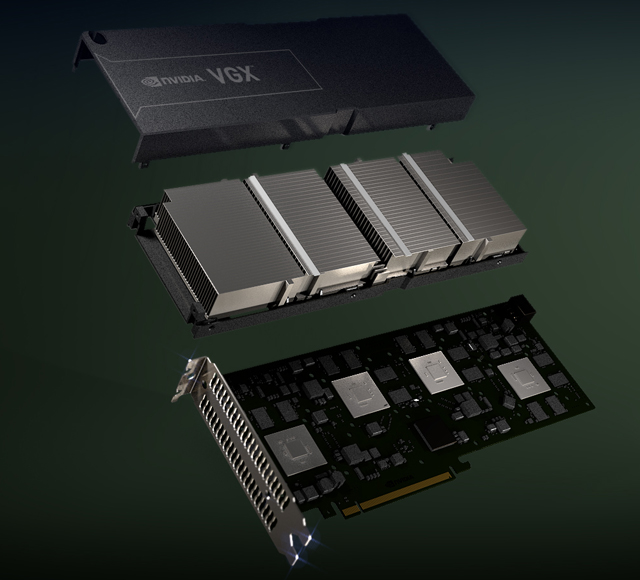
VGX 服务器:
[attach]1878233[/attach]


作者: goodfull    时间: 2012-5-16 03:24
没新品 相当无趣
作者: Edison    时间: 2012-5-16 03:25

结束了:

[attach]1878234[/attach]


作者: bobcat    时间: 2012-5-16 03:30
本帖最后由 bobcat 于 2012-11-1 15:58 编辑

.........................
作者: bobcat    时间: 2012-5-16 03:32
本帖最后由 bobcat 于 2012-11-1 15:58 编辑

..............................
作者: Edison    时间: 2012-5-16 03:33
bobcat 发表于 2012-5-16 03:32
cho, 其实gk110现身了. 只是被downplay了. 你发现了妈?


你是指实体卡还是什么呀?我没发现,我只是看 live video。


作者: Edison    时间: 2012-5-16 03:36
NVIDIA 官方 GK110 计算架构白皮书下载:

http://www.nvidia.com/content/PD ... rch_May_2012_LR.pdf

PCINLIFE GK110 计算架构前瞻:
http://pc.pcinlife.com/Graphics/20120507/128.html
作者: Edison    时间: 2012-5-16 03:39

Virtual Desktop Infrastructure (VDI) 动态体验视频:

http://www.nvidia.com/content/cloud-computing/videos/vgx-sxs-windows-areo-640x360.swf

http://www.nvidia.com/content/cloud-computing/videos/vgx-sxs-video-playback-640x360.swf

http://www.nvidia.com/content/cloud-computing/videos/vgx-sxs-google-earth-640x360.swf

http://www.nvidia.com/content/cloud-computing/videos/vgx-sxs-professional-3d-app-640x360.swf


作者: bobcat    时间: 2012-5-16 04:04
本帖最后由 bobcat 于 2012-11-1 15:58 编辑
.

..................

作者: Edison    时间: 2012-5-16 04:06
GK110 其实有实体,不过前台没展示。
作者: bobcat    时间: 2012-5-16 04:17
本帖最后由 bobcat 于 2012-11-1 15:58 编辑

.............................
作者: 66666    时间: 2012-5-16 05:15
虚拟桌面这个不知道跟微软自己的有什么区别
作者: bobcat    时间: 2012-5-16 06:02
本帖最后由 bobcat 于 2012-11-1 15:58 编辑
.

.....................
作者: cbr250xc    时间: 2012-5-16 07:50
我发现老黄的 手臂又粗了,三头肌不错。
作者: 骨刺    时间: 2012-5-16 08:12
老黄一身肌肉是不错~
作者: f0f0f0    时间: 2012-5-16 08:25
本帖最后由 f0f0f0 于 2012-5-16 08:26 编辑

GK110冗余的一组SMX是无论良率、功耗表现如何都不会开启,还是像GF100那样被阉割了一组SM?
作者: GTX999    时间: 2012-5-16 08:26
本帖最后由 GTX999 于 2012-5-16 18:53 编辑

晶体管较104翻倍sp只多了70% 效率下降喽,能耗比会和7970差不多低。

ngun我们等发布好了 哈哈

作者: 围观    时间: 2012-5-16 08:47
E大, 好:
cuda数目貌似是2688, 您笔误了.
作者: Edison    时间: 2012-5-16 08:52
改了呀。
作者: G81    时间: 2012-5-16 09:02
隔壁爆料GK110的显存位宽是512bit  4000Mhz的显存频率,等E大出来证实
作者: mooncocoon    时间: 2012-5-16 09:13
double precision是个神马情况?单纯的增加判断宽度还是现在可以双方向同时跑然后丢掉其中的一个了~?
作者: G81    时间: 2012-5-16 09:14
mooncocoon 发表于 2012-5-16 09:13
double precision是个神马情况?单纯的增加判断宽度还是现在可以双方向同时跑然后丢掉其中的一个了~?

隔壁爆料GK110的显存位宽是512bit  4000Mhz的显存频率,月大快出来证实
作者: badchris    时间: 2012-5-16 09:15
提示: 作者被禁止或删除 内容自动屏蔽
作者: lanyan3232    时间: 2012-5-16 09:17
提示: 作者被禁止或删除 内容自动屏蔽
作者: G81    时间: 2012-5-16 09:18
badchris 发表于 2012-5-16 09:15
都6G的倍数显存了哪来的512bit控制器……C H H真能YY

那你说256GB/S的带宽是怎么来的?
作者: badchris    时间: 2012-5-16 09:19
提示: 作者被禁止或删除 内容自动屏蔽
作者: G81    时间: 2012-5-16 09:20
badchris 发表于 2012-5-16 09:19
频率啊,还能是什么

多高的频率?
作者: lhw56    时间: 2012-5-16 09:21
集成电路的发展不到100年已经那么牛逼了 ... 我觉得有外星科技呀!!!
作者: G81    时间: 2012-5-16 09:21
badchris 发表于 2012-5-16 09:19
频率啊,还能是什么

多高的频率?5300也到不了256GB/s
作者: G81    时间: 2012-5-16 09:23
512bit   4000Mhz的带宽正好是256GB/s
作者: badchris    时间: 2012-5-16 09:25
提示: 作者被禁止或删除 内容自动屏蔽
作者: G81    时间: 2012-5-16 09:27
badchris 发表于 2012-5-16 09:25
自己和GK104对比不就知道了,256/(384/256*192.2)*6000,大约5330左右

5350这数字看着别扭啊,NV重来没用过这样数字的频率啊
作者: mooncocoon    时间: 2012-5-16 09:28
Dynamic Parallelism和Hyper-Q是加成式的玩意……NV的并行度和复用率又上新台阶了
作者: G81    时间: 2012-5-16 09:31
本帖最后由 G81 于 2012-5-16 09:31 编辑
mooncocoon 发表于 2012-5-16 09:28
Dynamic Parallelism和Hyper-Q是加成式的玩意……NV的并行度和复用率又上新台阶了
这两个玩意对游戏似乎都没用
作者: 扫帚    时间: 2012-5-16 09:31
没有人关注这个吗? 哎...
http://www.nvidia.com/object/vdi-desktop-virtualization.html


作者: G81    时间: 2012-5-16 09:33
扫帚 发表于 2012-5-16 09:31
没有人关注这个吗? 哎...
http://www.nvidia.com/object/vdi-desktop-virtualization.html

单卡4GPU?NV有这个能力?
作者: mooncocoon    时间: 2012-5-16 09:33
G81 发表于 2012-5-16 09:31
这两个玩意对游戏似乎都没用[cat>

游戏图形应用同样是一个个的任务,只要是任务串就会或多或少的从并行度的提升以及复用率的提升中获益。
作者: badchris    时间: 2012-5-16 09:33
提示: 作者被禁止或删除 内容自动屏蔽
作者: badchris    时间: 2012-5-16 09:33
提示: 作者被禁止或删除 内容自动屏蔽
作者: 扫帚    时间: 2012-5-16 09:40
本帖最后由 扫帚 于 2012-5-16 09:41 编辑
G81 发表于 2012-5-16 09:33
单卡4GPU?NV有这个能力?

nv当然没有了, 一般来说在自己官网上放出来的图就是用来打自己脸的
http://www.nvidia.com/object/vgx-boards.html

作者: Edison    时间: 2012-5-16 09:41
192 cuda core 的 GPU 为啥不能 4 chip per board?
作者: Edison    时间: 2012-5-16 09:45
10:19

Hi folks, we’re almost ready to kick off the GTC 2012 opening keynote. Stay tuned for some big news from our CEO Jen-Hsun Huang.
10:26

The doors just opened and about a jillion people are coming into the hall, the lights are blue and gray. One Republic’s Good Life is playing loud. Feels like GTC is starting.

10:28

There are a good couple thousand people in the hall, waiting for Jen-Hsun Huang, NVIDIA’s CEO, to take the stage. He’s a good performer but was in especially good form early this morning.

10:29

Hard to judge the demographic here. Lots of lean bald guys. A good number of graying professorsial types. There’s French, Russian and Hindi being spoken behind us.

10:31

The press table’s jammed up. more tablets, with attachable keyboards, being used for note taking. no ultrabooks in sight, but that could show how tight bugdets are at media companies.


10:33


10:33

Like most nvidia folks, we’ve been working on this show for several months, anyway, more or less nonstop. If i was a betting man, i’d say this will be our most news-filled one yet. four press releases are teed up to go out once jen-hsun starts talking.

10:34

pretty cool visuals on the screen as we wait. super closeups of gpus. they look like tidy city blocks in suburban sweden


10:36

there’s a list of GTC sponsors up there, too. a much bigger range than before. Microsoft. Leonvo. TSMC Superrmicro, HP, Dell, among others

10:37


10:37

Expect to hear a lot about Kepler. A lot about new uses for GPUs that we haven’t talked about before.

10:38


10:40

feels like we’re moments away from takeoff here.

10:41

we’re being asked to silence phones. a good sign

10:42

music’s thundrous. just about melting my laptop

a

10:43

ahh, an intro video about the widepsread use of gpus, pretty shocking graphics

swarms of locust, gamma rays, medical compounds morphing, self-driving vehicles


10:43

here are uses of gpu’s: figuring out how to attack h1n1, among ohter things

10:44


10:44

okay, jen-hsun’s taking the stage,dressed in trademark black pants, a black nvidia jacket

10:45

he says the scientists are the stars. three things ahead: update on progress with gpu’s. reveal for the first time technologies we’re working on back in the labs. and introduce you to some partners we’re working with who might surprise you

10:46

cuda’s made big progress over theyear he notes. in 2008 cuda was downloaded 150K times and taught in 60 univeristies. now, there are 1.5M downoads and 560 universities teaching in.

10:46

four years ago, 4K acadsemic papers were written about CUDA, today it’s 22,500

10:48

he compares cuda’s growth to Hadoop and to OpenMP, which are shown gently curving upward over the past five years. CUDA’s growth curve, just superimposed on the graph, is steeply sharper. JHH says it’s a reflection of the ease of CUDA

10:48

“i don’t know of one computer company that doesn’t sell computers with cuda”

10:49

here are some testamonials to CUDA: Ianan Couzin of Princeton, “gpu computing has utterly transformed the science we can do.”

10:51


10:51

the adoption of CUDA is industry wide, JHH says. In 2007, nvidia went to supercomputing 2007, hosted in reno. there’s a show floor map with a little green dot that shows where CUDA was being used. it’s about one-five-hundredth of the floor. In SC11, the floor map shows green over about three-quarters of it

10:52

he lists areas of GPUs in science: adaptive radiotherapy, dedrite simulation, collecdtive behavior, combustion efficiency, air traffic modeling, seismic tomography

10:53


10:53

there’s so much going on here, from image processing and machine vision, even computer graphics.  

10:54

those are our achievements thus far, but they’re nothing compared to what lies ahead., he says. our most important inventions are going to be described now. starting with kepler

10:54

we’ve worked on kepler for three years. it’s a gpu that will fundamentally advance graphics and computing. it’s a big, big deal for us. the most energy efficient gpu we’ve built, and the most feature packed.


10:55


10:55

He introduces a heavy duty GeForce Kepler process; the gtx 690, which is pretty gorgeous looking. i

10:56

there’s a massive picture of it on the screen, ribbed with alumnum and magnesium. dual vapor chambers, a soft-rotating axial fan so it’s whisper quiet

10:57

there’s no vibration, he says, so performance is the best it can be. and there’s a cool feature — “geforce gtx” lights up in green when it’s whirring away

10:58


10:58

“there’s nothing more wonderful than great craftsmanship.” but let’s see what it can do, jhh says. so he shows some incredibly sophisticated renderings of light shining on cyrstal through to highly-buffed hardwood floors

10:58


10:59

among the most difficult things is shattering things. the imagery needs to behavior in real life, with shadows, light refraction and reflection. to merge simulation and computer graphics is pretty challenging.

11:00

when the crystal cylanders crash, the create new geometry and it’s creating that in real time

11:01

he shows a bullet going through three crystal cylindars, which reflects and refrects through the glass as it shatters it into a jillion jagged pieces

11:01

he now talks about a holy grail of computer graphics, ray tracing, which is incredibly hard to do.  

11:02

with kepler we can do ray tracing in real time

11:03

“let’s kick it up a notch,” jhh says. what if we did ray tracing on fluids. so he shows drops into a crystal box, with simulated waves. “just watching it lets the stress flow out of my fingertips.”

11:04


11:04


11:05

computer graphics is at the cusp of becoming revolutionalized again. the beauty of interactive, real-time simulated effects are only possible due to hpc work. simulating and computer graphics are merging. computer graphics will soon look nothing like game consoles and pc’s today.

11:06

video game industry is tens of billions of dollars large. so if we can leverage serving that and bring it to bear in other areas, we can fabulous things

11:06

so, kepler is a big deal for graphics but its’ other persona is as the world’s fastest, most efficient hpc accelerator

11:07

there are three key qualities kepler has in this area. First, its streaming processor. Fermi has 32 cores, Kepler has 192 cores and is three times more energy efficient.

11:08

ultimate performance of computing the future is limited by energy, at all levels.smx, the streaming processor for kepler, brings efficiency to a whole new level

11:10

Okay, so if SMX is Kepler’s first key quality, the next one is Hyper-Q. problem is GPUs today are getting so powerful that it’s harder for a cpu core to keep a gpu busy. right now, Fermi has just one work queue, which can’t keep the gpu busy. the answer is Kepler with 32 concurrent work queues. we can now keep 32 queues fully skedded  

11:12


11:13

The third key Kepler innovation is dynamic parallelism.


11:14


11:14

he’s getting waist-deep in graduate-level technology right now. but he shows how, with kepler, each core can generate work for itself.

11:14

kernels can now start new kernels. streams can spawn new streams. the benefit is profound.

11:16

he illustrates dynamic parallelism with an example. shows a combustion turbulent flow simulation. each grid is coarse, some grids have little information. as a result, we lose features that are inside a number othe grids. then he shows dangers of making it too fine. the right answer is some form of adaptive mesh simultaion, so we can zoom in to iterate and refine results of the simulation

11:18

so, let’s see kepler in action. for help, we have one of our parallel programming engineers

11:18


11:19


11:19


11:19

he shows a demo of enormous simulations that’s modeling interactive bodies — an n-squared simultaion, simultaing a million particles a second. there are 400 million interactions in each image

11:20

but that was fermi. now kepler, shows a whole step up. instad of 20K bodies, 280K bodies.  

11:21

the image being shown at lower left is milky way, to right is andromeda galaxy, being simulated to 3.8 billion years from now. it’s a simulated time machine.

11:21

it shows merger of milky way and andromeda galaxy

11:22

beautiful swirls of stars are moving across the screen. bad news is that in 3.8 billion years, we’re going to collide. JHH: My advice to the audience is to put your personal affairs in order

11:24


11:24


11:25

so, why do we care what happens 3.5b years from now? well, it’s beautiful. it’s interesting. but we can also use the same technology to simulate proteins at a nanoscale. simulations apply to day to day life.

11:25

one million particles per second two years ago, 10 million paricles per second today, resulting in a full-scale simulation of the milky way and andromeda

11:26


11:26

we’re announcing two products today, two kepler: Tesla K10 dedicated to seismic analysis where most valuable resource is bandwidth. it has 3x single precision of today’s fermi tesla and 1.8x the memory bandwidth

11:27

second tesla, k20 is focused on double precision: 3x double precision of fermi, includes hyper q, dynamics parallelism, for stuff like physics, quantum chemistry, computational finance

11:28

we have something new now….

11:28

engineers have been working on something never seen before.  

11:29

there are three technologies i have to announce. first, the largest, most powerful GPU we’ve ever built, which is much more powerful than kepler. two, i’m going to announce a gpu so small we can put in an ipad. three it’s a gpu we can all share.

11:29

today, we’re going to take the gpu into the cloud. we’ve been working on this for five years.

11:30


11:30


11:30


11:31

kepler is world’s first gpu designed for the cloud, to be deployed into cloud data centers worlwide. it does this with:

–virtualized gpu

–no longer does it need to connect to a display, it can render and stream instantaneously right out of chip to a remote location

–super energy efficiency, so it can be deployed in a massive scale

11:31


11:32

every command buffer is now virtualized. we can now discern which virtual machine were to send us a graphics command. at the end, we can stream frame buffer to that spsecific virtual machine. one gpu can be shared with countless users

11:32

question: what’s the application?

11:33

well, one is BYOD. new employees are bringing whatever device they want to work. just as we no longer have company cars, we no longer have company computers. problem is, they need to be integrated into the corp network, which tends to be windows. needs to work with devices that run ios, chrome, android.

11:34

the architecture we hope for is ability to put the computer in a private cloud, in the server room and provide streaming applications to your various computing device

11:35

if you’re a task worker like in a call center, that virtualization is available through citrix, which has pioneered vdi. it’s taken until now to really take off. now we need to solve for power worker, designers, engineers, who use powerful, rich interactive computers

11:36


11:37

it’s a “PC as an App.” problem is now graphics is only being done on software, through citrix’s xendesktop. whenever you interact your application, it consumes pixels. but if we virtualized the gpu, added kepler and developed a gpu-aware hypervisor software, these virtual machines see it as its own. each virtual machine has a gpu to itself

11:38

hopefully, we can accelerate vdi to support power users, designers, anyone with a workstation or pc, just as it now supports task workers.

11:38


11:38


11:38


11:38

introduces citrix sumit dhawan, group vp and gm of citrix

11:39


11:39

JHH: Youve been evangilizing vdi for two decades, now it’s catching fire. why?

Sumit: the need for people to work anywhere. desktop virtualization is a perfect solution for that,  

11:40

JHH: virtualization is a dream that’s too good to be true. what needs to be done to take it to a new level?

Sumit: if you look at profile of our users, they’re task-based office workers, using Office or productivity apps. biggest challenge is to extend virtualization to all users.

11:42

JHH: so, answer is to virtualize gpu for citrix. let’s show what it’s like. as easy as any device.


so, jhh and sumit go to an iPad, touch the citrix receiver on it and a Windows desktop pops up. On an iPad!!

11:43


11:43

so, jhh goes to the Control Panel on the Windows desktop on the iPad. he shows there are more than 1,000 cuda cores on the tablet (because it’s virtualized)

11:43


11:44

running it isn’t just faster, but any app that nvidia could be used with is now accessible. now, they’re looking at autodesk showcase. the application is running on the server, powered by nvidia vgx technology, but it’s being shown on an ipad

11:45

so ipad, citrix receiver, ability to work on any device from anywhere….this is how you’d use it if you were a power user. but if you want to do this at an extreme level….

11:46


11:46

our next guest has worked on star trek, pirates of the caribbean, avengers and upcoming movie, battleship. welcome on stage: visual effects supervisor, Grady Cofer from Industrial Light & Magic

11:47

JHH: suppose we used this vgx technology availabale, what can a digital artist do it who works on 10s of terabytes of data.  

11:48

Grady: all of data is localized at ILM, a lot of my work is presentation, need to go to LA and show some film. now, i need to bake everything down, but i dont have access to how it was made.

11:49

Grady: i can’t show it from a different angle. when i’m presenting work, people are just taking notes because the digital assets are so massive. it’s hard to extract from our pipeline. now, with vgx, i can go into our pipeline.

11:49


11:50

Grady shows a Macbook Air that he’d take to LA, which he clicks to get into his workstation desktop. i can show you a live scene running Maya from ILM’s offices in the Presidio

11:51

grady shows how a scene from the avengers can be resculpted on his virtual desktop sitting on a Macbook.  jensen’s so excited he’s got his black jacket off

11:52

grady: over the course of the year we had five weeks left and 500 shots left. a hundred shots a week.  

11:54

now he’s showing a compositing application called Nuke running a scene from Battleship. he shows a battleship with shredders hurling at it. he shows how you can access shredders and change them around. he’s accessing terabyes of information remotely

11:55

grady: you can art direct this shot remotely. he’s correcting colors in real time. you can art direct a shot on the fly.

11:56

grady and jensen are hitting it off pretty well and talking about making movies together

11:56

whoah

11:56


11:57

great reveal. 100 screens streaming off of one workstation.  

11:57


11:57


11:57

th thing that’s really cool here, jensen says, is that you can see scenes from grady’s movies — starr trek, pirates of caribbean, and wild wild west. “grady, this is your life,” jensen says

11:58

JHH: all of this is fantastic, unless we can get it into a server environment, it’s pointless. how do we get it into the hands of users asap?

11:59


11:59

very few people could talk about how virtualization is changing, jhh says. ,he introduces someone who’s now svp and gm at Cisco, who’s working on next gen enterprise computing. He’s David Yen.  

11:59


12:00

“like our last guest, everyone here knows your work. they’ve been affected by your work, either at sun or at cisco. all of our packets have been touched by your work.

12:01

JHH: why is cisco into virtualization?

David: cloud, data center are becoming synonyms. in anticipation of this, cisco as early as 2004-5 began devising Cisco UCS. it’s designed to be guided by applications or managing software running ontop of it.

12:03

JHH: the server we’re working on together addresses problems vdi has run into. what are bottlenecks vgx can solve?

David: we can always use more performance. a better performance is better experience. this is the major challenge we have. to achieve higher economic effciiencies, we want to support as many users as possible.

12:03

david: this is why we share the objective for the best end-user experience.

JHH: we have the opportunity to build something revolutionary together

12:04


12:04

JHH: VGX is our first product based on kepler. it’s purpose is to accelerate VDI

The next application I want to talk about is cloud gaming!

12:05

what if we could stream and serve incredible video games from the cloud. instead of enterprise apps, what if we could host video games inthe cloud and stream them to any device, anywhere. the benefit can’t be overstated. when it becomes more convenient, it will be used more

12:07

GeForce GRID is the new product that runs this

12:08

game input lag is the big issue with streaming. jensen shows some pretty interesting data about the lags involved in streaming

12:09

with the geforce grid, virtualized technology we can reduce input lag to the level of a game console

12:09


12:09


12:10

to show this, i want to introduce someone who’s been working on computer games since he designed his first game at age 15. he’s worked on 100 games and 29 different game consoles. He started with a company called Shiny Entertainment, which he sold to Atari and became its president. He’s Dave Perry, CEO and co-founder of Gaikai

12:10


12:11

JHH: What was the moment for you in 2008 or 2009 that caused you to start Gaikai?

Dave: we were getting jealous of the movie industry.

12:12

Dave: call of duty was biggest entertainment launch ever. if we could make this work, could we get best games right into the hands of gamers?

12:12

Dave: can you imagine making a movie and it runs on just one brand of TV? it’s crazy. that’s the way gaming is.

JHH: what obstacles did you need to overcome?

12:13

Dave: there were video compression problems, we tried all sorts of algorithms. question was how do we solve this data center problem once and for all.  

12:15

Dave: we’ve been setting up data centers all over the wrold, we’ve set up in 88 countries.

JHH: we’ve been working together for a few years, now we’re getting ready to scale out. we want to serve users on all sorts of devices

Dave: when we first started talking about it, a lot of people thought it was impossible. we’ve made advances that people just didn’t assume could be possible.

12:16

There are two NVIDIA gamers on stage, Clay and Andrew, at opposite ends of the very large stage. Andrew’s on a TV. Clay on a Transformer Prime. They’re going to start playing a new game called Hawken streamed from a cloud.

12:17

Dave: we’re going to be able to place these games everywhere. we’ll be able to put these games directly on the web. on walmart.com, on youtube.com, on facebook. To some extent, we’re going to beat hollywood.

12:17

Dave: the audience has no access to the code. it’s all being streamed.  

12:18

showing transformer prime running hawken, a very cool mult-player world. Andrew is standing in front of a TV playing against Clay.  

12:19

Dave: you could now play a game the instant it comes out. you can tell your friends online, and they can join you online. within a minute.

12:21

on the lg tv, the only thing connected to the tv is a usb cable

12:22

JHH” I want to thank all of our partners who will support us on the cloud gpu ecosystem. they include:

Enterprise VDI: citrix, microsoft, vmware, xen

gaming: gaikai, gcluster, palycast, otoy, ubitus

12:22

thank those OEMs making dedicated servers: dell, cisco, hp, ibm, supermicro

12:22


12:23

jensen: well, that’s it. kepler is a very, very big deal for our company. it’s not only a revfolutionary procesor, it will take graphics and gpus to the next level. it’s surely the case that compouter graphcis and gpus are becoming more and more amazing

12:23


12:23

JHH: Thanks. having a great GTC

12:23

that’s it. we have a press conference jensen has to do.

作者: mooncocoon    时间: 2012-5-16 10:02
本帖最后由 mooncocoon 于 2012-5-16 10:03 编辑
Edison 发表于 2012-5-16 09:45
[/td][/tr]
[/table][/td][/tr]
[/table]


你文章的GK110 SMX的配图,寄存器应该是错了……
作者: Windyson    时间: 2012-5-16 10:10
G81 发表于 2012-5-16 09:27
5350这数字看着别扭啊,NV重来没用过这样数字的频率啊

不要说从来,GK104已经打破了多少个从来? 一下子3倍SP,6GHz显存,功耗低,更渣PCB
作者: Edison    时间: 2012-5-16 10:11
mooncocoon 发表于 2012-5-16 10:02
你文章的GK110 SMX的配图,寄存器应该是错了……

反正我是按照 SMX Pro 来画的
作者: Windyson    时间: 2012-5-16 10:12
扫帚 发表于 2012-5-16 09:40
nv当然没有了, 一般来说在自己官网上放出来的图就是用来打自己脸的
http://www.nvidia.com/objec ...

看那供电,不可能GK104x4,
GK107x4为神马没可能?
作者: 扫帚    时间: 2012-5-16 10:25
Windyson 发表于 2012-5-16 10:12
看那供电,不可能GK104x4,
GK107x4为神马没可能?

有点幽默好不好...
作者: coollab    时间: 2012-5-16 10:30
Windyson 发表于 2012-5-16 10:12
看那供电,不可能GK104x4,
GK107x4为神马没可能?

我觉得是G94×4
作者: Windyson    时间: 2012-5-16 10:38
coollab 发表于 2012-5-16 10:30
我觉得是G94×4

9600还得要6pin供电
640不用外接供电

9600x4还得要双8pin供电
640x4要单8pin够了
作者: coollab    时间: 2012-5-16 10:50
Windyson 发表于 2012-5-16 10:38
9600还得要6pin供电
640不用外接供电

那就G98×4
作者: yyzjp    时间: 2012-5-16 10:52
GK110主打计算还是游戏?
作者: automation    时间: 2012-5-16 11:02
请教Edison:
GK110的SMX内的缓存,也就是cuda里的shared memory 是多大?难道还是GK104的 48K?

fermi下已经觉得缓存不够用了啊,现在SM变成SMX,SP翻了3倍,还不变缓存么
作者: Edison    时间: 2012-5-16 11:08
shared memory 是 48KiB/32KiB/16KiB 这三种可配置容量。

其实不够用的何止 PDC,register file 其实也偏低了些,相对于 GF110 来说。

作者: Edison    时间: 2012-5-16 11:09
yyzjp 发表于 2012-5-16 10:52
GK110主打计算还是游戏?

都会有产品。
作者: mooncocoon    时间: 2012-5-16 11:15
Edison 发表于 2012-5-16 11:08
shared memory 是 48KiB/32KiB/16KiB 这三种可配置容量。

其实不够用的何止 PDC,register file 其实也偏 ...

有32K配置啦?
你妹的你到底藏了多少私货啊
作者: badchris    时间: 2012-5-16 11:34
提示: 作者被禁止或删除 内容自动屏蔽
作者: Edison    时间: 2012-5-16 11:39
mooncocoon 发表于 2012-5-16 11:15
有32K配置啦?
你妹的你到底藏了多少私货啊

我 3 月的时候就说过了
作者: mooncocoon    时间: 2012-5-16 11:40
本帖最后由 mooncocoon 于 2012-5-16 11:40 编辑
Edison 发表于 2012-5-16 11:39
我 3 月的时候就说过了


好吧,算我忙迷糊了结果错过了吧……
作者: disruptor    时间: 2012-5-16 11:43
也许这意味着不再需要物理卡了。单gpu实现图形渲染与物理加速同时进行
作者: G81    时间: 2012-5-16 11:48
geforce显卡估计可以2880SP  384bit  7Ghz频率
作者: yyzjp    时间: 2012-5-16 11:51
NV想远远的吧AMD甩开吗这是? 貌似规格很强大
作者: 刘丹    时间: 2012-5-16 11:55
Kepler的光线追踪可以跑到多少帧一秒啊?
作者: Edison    时间: 2012-5-16 11:57
刘丹 发表于 2012-5-16 11:55
Kepler的光线追踪可以跑到多少帧一秒啊?

那个 ray tracing 可能是 GTX 690 跑的也不定。
作者: gz_easy    时间: 2012-5-16 12:06
如果GK104不为游戏“瘦身”,那么其晶体管数量超过大溪地是没有问题的。
GK110的瘦身版会有吗?
作者: G70    时间: 2012-5-16 12:16
提示: 作者被禁止或删除 内容自动屏蔽
作者: bobcat    时间: 2012-5-16 14:29
本帖最后由 bobcat 于 2012-5-16 14:32 编辑
扫帚 发表于 2012-5-16 09:31
没有人关注这个吗? 哎...
http://www.nvidia.com/object/vdi-desktop-virtualization.html

我去听他们讲了一下午。

这卡TDP 150W. 一台刀刃上插两块。

有人问这四片是啥型号的GPU? 答说VGX类产品不讨论具体GPU型号,事实上物理的实现只是很小的一部分。 难的地方在写稳定有效率的hypervisor。众所周知,NV是个卖软件的公司。


我问为啥用DX9, 换DX 11行不? 主持人答说很难, 里边的软件全部得重写。
Citirx比VMware在GPU virtualization 上感觉要先走了一步。难怪 VMware现在到处在挖懂GPU driver的人。

这个市场粘性很大, VGX/Game Grid隔几年卖得比Quadro, Tesla还好也不一定。

Gaikai, Onlive是一个未来的方向。也许我们以后都不用再买GTX玩游戏了。 游戏公司=电影制作公司, Game center = 电影院, 用薄设备联云玩3D游戏 = 去电影院看电影。


欢迎光临 POPPUR爱换 (https://we.poppur.com/) Powered by Discuz! X3.4